Charging & power · Care & ideas
Power Tool Battery Adapters: A Practical Fit Guide
Choose a tool battery adapter by matching the battery platform, target device and stated model series before connecting power.
In this guide · Jump to a section
Power tool battery adapters can turn a familiar battery pack into a useful power source for another device. The catch is that an 18V label is only one part of the match. The battery slide, polarity, electronics and target tool series all need attention.
This guide explains how to choose a Makita, Milwaukee, DeWalt or Ryobi battery adapter without guessing. It separates Dyson vacuum converters, tool-platform converters, a wired DIY dock and a USB battery adaptor, then shows the listed options at OfficeCatch.
Start with the battery platform and target device
Write down two names before shopping: the battery platform you own and the device you want to power. “Makita 18V” identifies the source side, but the destination might be a Dyson V6, a Dyson V7/V8, a Ryobi 18V tool, or a DIY project. Those destinations require different connectors.
Find the model code on the vacuum body, battery or tool label. A Dyson V6 adapter is not automatically suitable for V7 or V8 machines. For tool-to-tool conversion, read the adapter description for the named battery families and the named tool family. Treat a claimed fit as specific, not as a broad brand promise.
Also identify the adapter's job. A converter joins one battery platform to another device. A dock with loose wires provides power for a project. A USB module draws from the battery and provides a 5V USB output. None should be treated as a replacement for the battery's normal charger unless its listing expressly says so.
Adapter types and the checks that matter
| Adapter type | Source battery named | Destination named | Check before use |
|---|---|---|---|
| Vacuum converter | Makita 18V or Milwaukee M18 | Specific Dyson V-series | Confirm the Dyson series, not just the brand. |
| Tool-platform converter | Milwaukee or DeWalt packs | Makita 18V tools | Confirm both battery family and tool platform. |
| Tool-platform converter | Makita 18V Li-ion | Ryobi 18V tools | Check the tool is within the stated Ryobi range. |
| Wired battery dock | Makita 18V Li-ion | External DIY device | Plan polarity, insulation and load first. |
| USB battery module | Makita 14.4V or 18V | 5V USB device | Use it for the stated 5V USB output. |
The table is a selection map rather than a compatibility shortcut. A battery's nominal voltage can look familiar across brands, yet the mounting rail and terminal layout can differ. Never force a pack into an adapter. It should seat in the expected direction without trimming plastic, bending contacts or excessive pressure.
Choose by use case, not by the biggest battery
For a Dyson conversion, focus first on the exact vacuum series. The V7 and V8 share one listed Makita converter, while the V6 has separately listed Makita and Milwaukee options. This is more useful than selecting by a battery's capacity alone. Capacity affects how much stored energy a pack may have, but it does not change the adapter's physical target.
For cordless tools, a cross-platform adapter should describe the source battery and the target tool platform. The DM18M listing is for specified Milwaukee and DeWalt battery conversion to Makita 18V tools. The Makita-to-Ryobi listing is for using Makita 18V Li-ion batteries with most Ryobi 18V tools. Read those directions carefully; reversing them is a common ordering error.
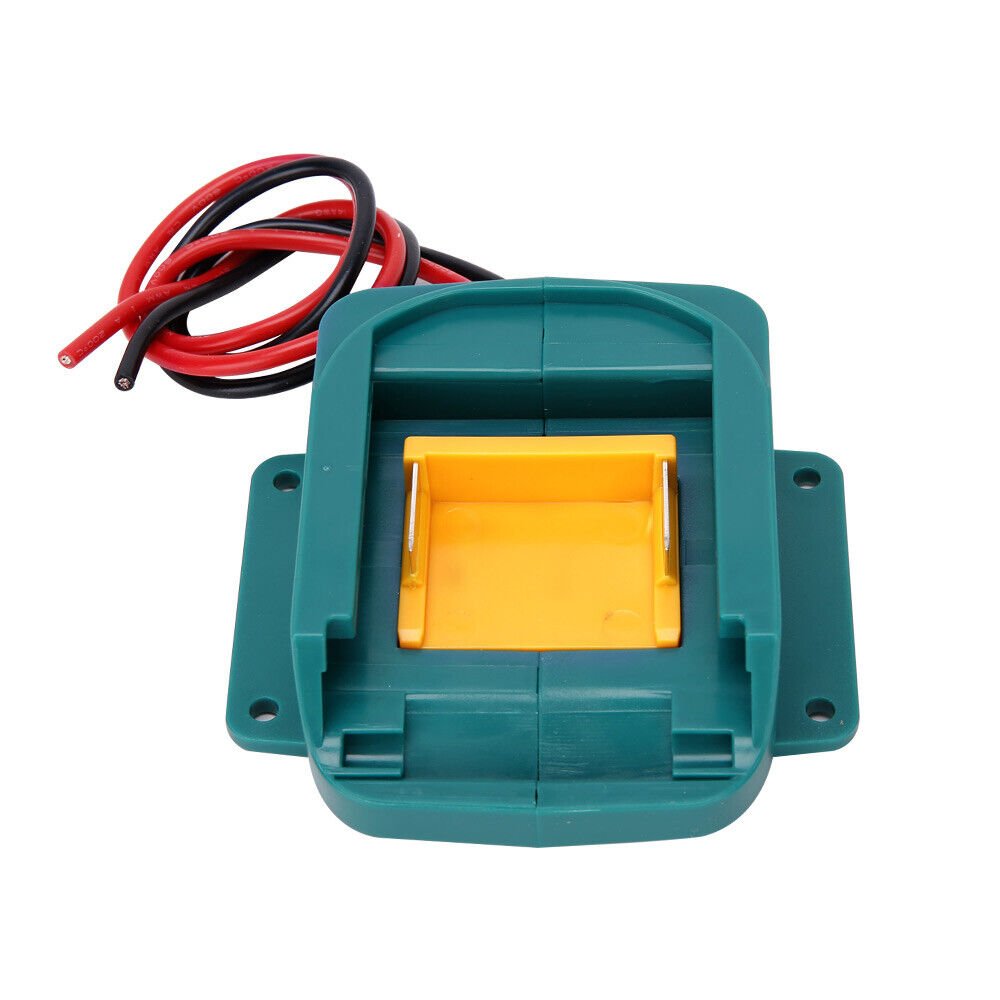
For a bench project, a wired dock demands more planning than a plug-on converter. Its two leads are intended to draw battery power for suitable DIY uses. Work out the device voltage, polarity, current demand, wire routing and enclosure before connecting a battery. If any part of that assessment is unclear, choose a purpose-built product instead.
Fit, heat and handling checks
Inspect the adapter and battery contacts before every first use. Keep them clean, dry and free of metal debris. Fit the battery with the device switched off, then make sure the release mechanism remains accessible. A pack that rocks, jams or will not latch is a stop sign, not something to correct with force.
Use the adapter only for its described combination. Do not join multiple adapters together, modify terminals, bridge contacts or use damaged packs. Stop immediately if you notice unusual heat, smell, swelling, sparks or intermittent operation. Let components cool in a clear area and remove the battery if it can be done safely.
For vacuum adapters, install with the vacuum powered down and test briefly before a full clean. For a USB module, use the stated 5V USB output and protect the battery from damp areas. Store loose adapters away from screws, nails and other conductive items that could contact terminals.
Relevant battery adapters at OfficeCatch
OfficeCatch groups several different adapter jobs, so the title and intended destination should guide the final choice. The following list covers every product in this collection and keeps the purpose of each option clear.
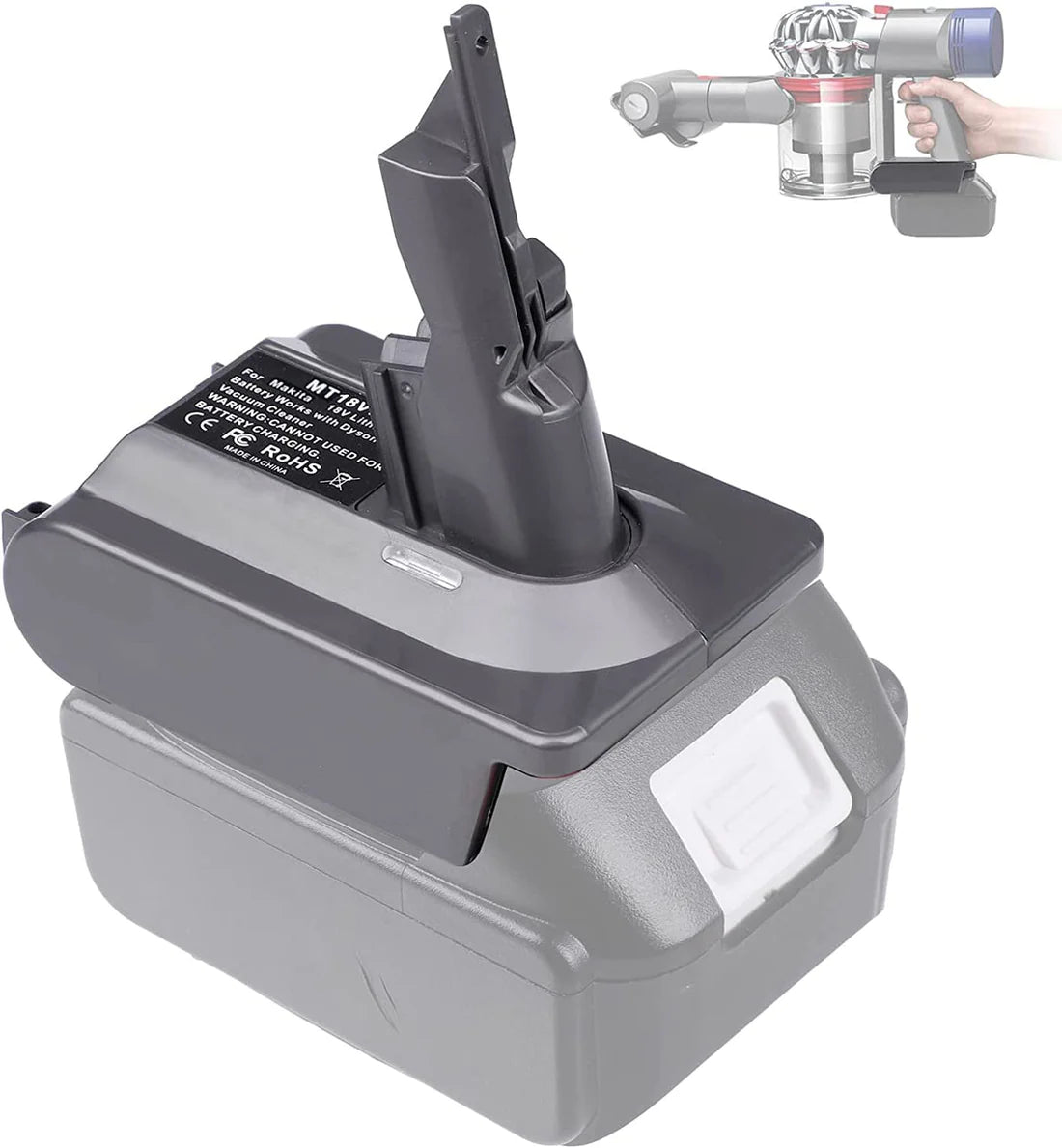
- Makita 18V converter for Dyson V7 and V8 is the listed option for those two Dyson series.
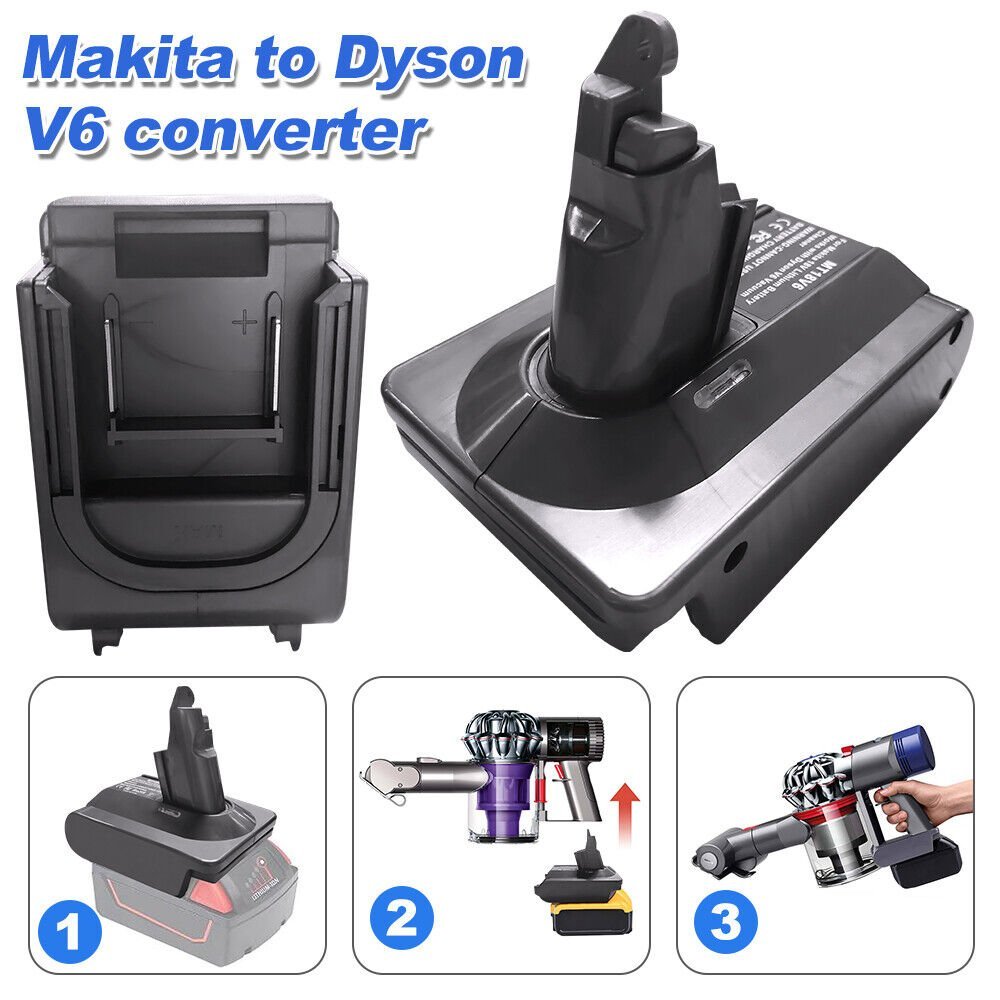
- Makita 18V converter for Dyson V6 is for a V6 vacuum and specified BL18xx packs.
- Makita 18V wired dock holder provides two wires for suitable DIY power projects.
- Milwaukee M18 adapter for Dyson V6 is another V6-specific battery conversion choice.
- DM18M Milwaukee and DeWalt to Makita adapter is described for Makita 18V tools.
- DCA1820 DeWalt 20V MAX to 18V adapter is listed for specified DeWalt 18V replacement batteries.
- Makita-to-Ryobi 18V tool adapter is for using Makita 18V Li-ion batteries in most Ryobi 18V tools.
- Makita battery USB phone charger adapter provides a stated 5V 2.5A USB output.
Before ordering, compare your labels with the product title and description one last time. That small check protects both the battery connection and the device you plan to power.
FAQs
Can a Makita 18V battery run a Dyson V6 vacuum?
A Makita-to-Dyson adapter listed for the V6 is intended to connect a Makita 18V Li-ion pack to a Dyson V6 vacuum. Check that your vacuum is a V6 and that the battery slides into the adapter correctly. The adapter does not include a battery, and it is not a charger.
Is a Dyson V7 adapter the same as a Dyson V6 adapter?
No. The products in this guide identify different Dyson series: one adapter is for V7 and V8, while separate adapters are listed for V6. Match the vacuum series printed on the machine or its original battery before buying. Similar-looking battery packs can use different physical connections.
Can I charge a tool battery through a battery adapter?
Do not assume an adapter charges a battery. A battery converter changes the connection between a named battery platform and a tool or device. Use the correct charger for the battery pack unless the product is expressly described as a charger. Remove the battery before checking connections or terminals.
What does 18V nominal and 20V max mean on tool batteries?
These labels can describe the same general class of lithium-ion tool pack in some product ranges, but they do not prove physical or electronic compatibility. Follow the adapter's named brands, battery series and intended tool platform. Voltage wording alone cannot confirm that an adapter will fit safely.
Products linked in this guide
-
Makita 18V To Dyson V7 & V8 Compatible Battery Converter / Adapter $35.95 AUD View current product details
-
18V Makita Battery Converter For V6 Dyson Vacuum Cleaner $34.45 AUD View current product details
-
Battery Power Mount Connector Adapter for makita 18V Dock Holder with 14 awg Wires $36.95 AUD View current product details
Check the product page for current specifications, compatibility and availability.